Seizure-symptom app is latest Apple health research tool

Johns Hopkins researchers today introduced EpiWatch, an app designed to collect data from patients with epilepsy before, during, and after their seizures. The app, which runs on Apple Watch and iPhone, uses the open source ResearchKit framework designed by Apple. The data gathered for the study by the app, including physiological changes, altered responsiveness, and other characteristics of recurrent seizures, will be used by researchers to better understand epilepsy, to develop new methods f...
More
Posted in Uncategorized

Researchers creating rapid diagnostic test for blood infections.

BYU is leading a collaborative team that has just kicked off a massive multidisciplinary effort to combat a threat to global health, the rising prevalence of bacteria that can’t be treated by antibiotics. Four BYU professors from three colleges have joined forces on the multi-year, National Institutes of Health-sponsored effort to create a faster diagnostic test for drug-resistant blood infections. As it stands now, diagnostic tests for these types of infections can take up to three days to prod...
More
Posted in Uncategorized

GMO Chickens Could Block Bird Influenza and Prevent Outbreaks

The latest innovative development by Researchers from the University of Edinburgh and the University of Cambridge are genetically modified glow-in-the-dark chickens developed in order to block the bird flu. The genetically modified organism chickens are given a shot of a fluorescent protein. The modified birds contain a protein to differentiate themselves from other chickens. Under ultraviolet light, their beaks and feet emit a haunting green hue. This sets them apart from regular birds To...
More
Posted in Uncategorized

New Modification Method Could Bring Lifesaving Medications to Market

A safe and efficient technique using cellulose to get drugs to safely reach their target to save lives was created. Xiangtao Meng, a fourth-year graduate student in the College of Natural Resources and Environment has developed a new technique that can get drugs to market, and to patients, that would otherwise fail. Taking medications orally is typically much more practical for patients than methods like intravenous injections, but the bioavailability of a drug the amount that actually rea...
More
Posted in Uncategorized

New Technology to Monitor Cancer Cells

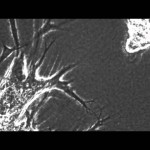
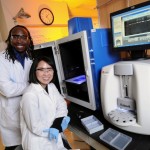
Deborah Kelly, a biologist at Virginia Tech Carilion Research Institute, has developed a "microchip-based toolkit" to watch the breast cancer affiliated BRCA1 gene act inside a human breast cancer cell. This new technology allows scientists to watch cancer cells in action at unprecedented resolution. They can now peer closely into the world of cells and molecules within a native, liquid environment. Kelly and colleagues have developed a way to isolate biological specimens in a flowing, liquid en...
More
Posted in Uncategorized

Kidney created from stem cells

Harvard Stem Cell Institute (HSCI) principal faculty at Brigham and Women’s Hospital (BWH) have established a highly efficient method for making kidney structures from stem cells derived from skin taken from patients. The kidney structures formed could be used to study abnormalities of kidney development, chronic kidney disease, and the effects of toxic drugs, and could be incorporated into bioengineered devices to treat patients with acute and chronic kidney injury. In the longer term, these me...
More
Posted in Uncategorized

Potential breakthrough in bid for Alzheimer’s treatment.

A potential drug target has been discovered that could help scientists develop radical new treatments for Alzheimer’s disease. Blocking activity of the protein, known as GPR3, results in toxic deposits thought to play a key role in the disease clearing away from the brain. Laboratory mice suffering from Alzheimer’s-like symptoms showed improvements in learning, memory and social skills when they lacked GPR3, according to research published in the journal Science Translational Medicine. Further t...
More
Posted in Uncategorized

Scientists discover how to trap cancer cells before they spread.

Researchers at the Francis Crick Institute and the University of Copenhagen have discovered a new way to 'fence in' a tumor and help stop cancer cells from spreading. Tumors cause cells called fibroblasts to stiffen the surrounding tissue so that cancer cells can grip it, allowing them to tunnel through to the blood stream and spread around the body. They showed that adding experimental drugs, reprogrammed fibroblasts helped in stopping them from 'stiffening' the tissue around tumors. This he...
More
Posted in Uncategorized

UCSB researchers create nanoparticles to act like blood platelets

Researchers at the University of California, Santa Barbara have created nanoparticles that resemble blood platelets that can be used to speed up the healing process and create clots faster to decrease blood loss from an injury. They have turned to the human body’s own mechanisms for inspiration in dealing with the necessary and complicated process of coagulation. By creating nanoparticles that mimic the shape, flexibility and surface biology of the body’s own platelets, they are able to accelera...
More
Posted in Uncategorized

Artificial Foam Heart Created

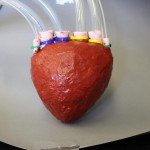
Cornell University researchers have developed a new lightweight and stretchable material with the consistency of memory foam that has potential for use in prosthetic body parts, artificial organs and soft robotics. The foam is unique because it can be formed and has connected pores that allow fluids to be pumped through it. The foam starts as a liquid, so researchers can pour it into a 3D printed mould in order to form the heart, adding appropriate valves to the finished structure. This means...
More
Posted in Uncategorized

Scientists produce clearest-ever images of enzyme that plays key roles in aging, cancer.

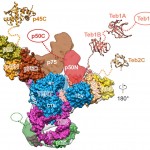
An enzyme called telomerase plays a significant role in aging and most cancers, but until recently many aspects of the enzyme’s structure could not be clearly seen. Scientists from UCLA and UC Berkeley have produced images of telomerase in much higher resolution than ever before, giving them major new insights about the enzyme. Their findings, could ultimately lead to new directions for treating cancer and preventing premature aging. “Many details we could only guess at before, we can now see...
More
Posted in Uncategorized

Brain cells can be activated by a prosthetic hand.

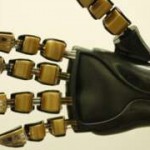
Researchers from Stanford University have improved artificial hands by attaching some flexible sensors on the fingertips, which can generate some electrical signals that can communicate with our brain directly instead of via a processor or a computer to translate back the signals to our brain. Engineers have built a flexible sensor that detects touch and, just like skin, produces electrical pulses that get faster when the pressure increases. They have also used those pulses to drive neuronal ...
More
Posted in Uncategorized

Predictive technique could help determine breast cancer therapies

Researchers at the Georgia Institute of Technology have developed a predictive model that can provide doctors with an "invasiveness index" for cancer based on blood samples from individual patients, according to a new study. The test is based on chemical expression by specific cells in the body that help cancer move from the breast to other parts of the body. We want women to have more information to make a personal decision beyond the averages calculated for an entire population," said Manu ...
More
Posted in Uncategorized

COMPASS method points researchers to protein structures.

University of Illinois researchers developed a new approach, dubbed COMPASS that points directly to a protein’s likely structure using a combination of advanced molecular spectroscopy techniques, predictive protein-folding algorithms and image recognition software. Led by U. of I. chemistry professor Chad Rienstra, the team published its results in the journal Structure. “We’ve taken a process that would take months and brought it down to hours,” said Joseph Courtney, an Illinois graduate studen...
More
Posted in Uncategorized

Malaria protein may hold key for cancer cure.

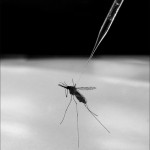
Danish scientists who were working on ways to fight malaria in pregnant women have accidentally discovered that the malaria protein they were using in their vaccine, when armed with a toxin, could kill cancer cells. The test was conducted on mice, and showed that the malaria protein first attached itself to the carbohydrate of the cancer cell, which later was killed off by the toxin. They hope to be able to begin tests on humans in the next four years. For decades, scientists have been search...
More
Posted in Uncategorized

Skin Cells Converted into Placenta-Generating Cells

Researchers at the Hebrew University of Jerusalem successfully converted skin cells into placenta-generating cells using the reprogramming method. The intent is to help women who have recurrent miscarriage and placental dysfunction diseases give birth to healthy babies, although researchers said more work will need to be done before that is possible. The placenta is the least understood human organ, but arguably one of the most important ones. It influences not only the health of a woman and ...
More
Posted in Uncategorized

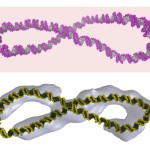
Supercoiled DNA is far more dynamic than the “Watson-Crick” double helix

Researchers have imaged in unprecedented detail the three-dimensional structure of supercoiled DNA, revealing that its shape is much more dynamic than the well-known double helix. As reported online today in the journal Nature Communications, the simulations also show the dynamic nature of DNA, which constantly wiggles and morphs into different shapes, a far cry from the commonly held idea of a rigid and static double helix. Improving our understanding of what DNA looks like when it is in the...
More
Posted in Uncategorized

How the Brain Controls Sleep

MIT neuroscientists have discovered a brain circuit that can trigger small regions of the brain to fall asleep or become less alert, while the rest of the brain remains awake. This circuit originates in a brain structure known as the thalamic reticular nucleus (TRN), which relays signals to the thalamus and then the brain’s cortex, inducing pockets of the slow, oscillating brain waves characteristic of deep sleep. Slow oscillations also occur during coma and general anesthesia, and are associate...
More
Posted in Uncategorized

Novel theoretical approach to reduce antibiotic resistance.

Moffitt Cancer Center researchers have developed novel theoretical approach to reduce antibiotic resistance. The increasing rate of antibiotic resistance and slowing discovery of novel antibiotic treatments presents a growing threat to public health. It is estimated that each year in the United States 2 million people become infected with bacteria that are resistant to one or more types of antibiotics, and at least 23,000 people will die because of these infections. This problem is being exacerb...
More
Posted in Uncategorized

GM pig organs could soon be transplanted into humans

Pig organs could soon be transplanted into patients after Harvard University scientists discovered a way to genetically modify pig DNA so it is more compatible with humans. Scientists have spent decades trying to engineer pig tissue so that it would not be rejected by the human body, but the immune system has always prevented success. A major hurdle in transplanting pig organs into humans has been overcome by the scientists. All pig DNA carries the porcine endogenous retrovirus which infects ...
More
Posted in Uncategorized

Antiviral compound fully protects monkeys from Ebola

Rhesus monkeys were completely protected from the deadly Ebola virus when treated three days after infection with a compound that blocks the virus's ability to replicate. These encouraging preclinical results suggest the compound, known as GS-5734, should be further developed as a potential treatment, according to research findings to be presented tomorrow at the IDWeek conference. Travis Warren, Ph.D., a principal investigator at the U.S. Army Medical Research Institute of Infectious Disease...
More
Posted in Uncategorized

Molecular “kiss of death” wins Noble Prize in Chemistry

Three researchers who unraveled the mechanism behind a molecular kiss of death, a tag that marks proteins for destruction, have been awarded this year's Nobel Prize in Chemistry. Irwin Rose of the University of California, together with Aaron Ciechanover and Avram Hershko from the Israel Institute of Technology in Haifa, transformed cell biology during the early 1980s through their studies of how proteins are broken down inside cells. Their work sparked new ideas about how cells regulate themsel...
More
Posted in Uncategorized

How the brain loses and regains consciousness

Massachusetts General Hospital (MGH) investigators have identified specific EEG (electroencephalogram) signatures that indicate when patients lose and regain consciousness under the general anesthetic drug propofol. The study reveals brain patterns produced by the general anesthesia drug which could help doctor’s better monitor patients. "We have discovered highly structured EEG patterns that indicate when people are sedated during administration of propofol, when they are unconscious and whe...
More
Posted in Uncategorized

Stem Cells Used to Strengthen Babies’ Bones in the Womb

The first clinical trial injecting fetal stem cells into babies in the womb will start in January and will be led by Sweden's Karolinska Institute and in the UK by Great Ormond Street Hospital. The stem cells will come from terminated pregnancies. It is hoped the cells, which are able to transform into a range of tissues, will lessen symptoms of incurable brittle bone disease. Severe brittle bone disease is rare but can be so devastating that many women decide to end their pregnancy on being ...
More
Posted in Uncategorized

Unique brain ‘Fingerprint’ offers new method of identification.

Neurologists at Yale University have discovered that it is possible to identify an individual's unique identity by mapping brain activity. Unlike a fingerprint, which is based on the physical structure of a finger or thumb, a brain profile is based on brain activity, which is similarly unique. The research, published in the journal Nature Neuroscience, used data obtained through functional MRI (fMRI) scans to build an individual's connectivity profile. Neuroscientists have found that they can...
More
Posted in Uncategorized

How the brain keeps time

Neuroscientists at MIT and Columbia University have now figured out how neurons in one part of the brain measure time intervals and accurately reproduce them. Keeping track of time is critical for many tasks, such as playing the piano, swinging a tennis racket, or holding a conversation. The researchers found the lateral intraparietal cortex (LIP), which plays a role in sensorimotor function, represents elapsed time, as animals measure, and then reproduce a time interval. They also demonstrated ...
More
Posted in Uncategorized

Gene-editing study reveals pathway that could help short circuit blood disorder

CRISPR is able to circumvent the genetic mutation that causes sickle cell disease. The latest Sickle Cell Research from Dana-Farber/Boston Children’s Cancer and Blood Disorders Center is that they have found that changes to a small stretch of DNA may circumvent the genetic defect behind sickle cell disease. They are developing gene-editing approaches to treat the disease and other hemoglobin disorders. This stretch of DNA, called an enhancer, controls a molecular switch that determines whe...
More
Posted in Uncategorized

‘Hackaball’ turns programming into play.

A smart and responsive ball that children can program to invent and play games has been created. A team of industrial designers is aiming to turn "programming into play" with a hackable ball that lets kids invent their own games. "Hackaball is a tough, responsive, programmable ball that pairs with an iPad app," explains William Owen, from innovation consultants Inside it is a gyro, an accelerometer, a vibration motor, nine LEDs, a rechargeable battery, some memory and a speaker. That...
More
Posted in Uncategorized

Nigerian student creates mobile medical battery back-up system.

A Nigerian product design engineering graduate from the University of Derby in the United Kingdom (UK), Jaiyeola Oduyoye, has created a mobile medical battery back-up system that aids the growth of surgeries taking place in developing countries. Oduyoye, has created a product that provides temporary backup electricity to operate in theatres in developing countries, countries that have difficulty in accessing 24/7 electricity, so that they are able to perform surgeries in their country, rather th...
More
Posted in Uncategorized

Tension helps heart cells develop normally in the lab.

Stanford researchers Beth Pruitt and Alexandre Ribeiro have discovered that a heart cell matured from stem cells in the lab looks and behaves like a normal adult heart cell when grown in a long, thin shape and on a surface that provides some tension. Pruitt and her colleagues at the Stanford University School of Medicine began working on the problem of how to develop more normal looking heart cells through a Stanford Bio-X grant in 2010. At the time, their goal was to find ways of probing the me...
More
Posted in Uncategorized