Self-Propelling healing powder stops internal bleeding.

Scientists at the University of British Columbia have developed a self-propelled powder capable of delivering coagulants to hard-to-reach severe bleeding sites, like a ruptured uterus or severed aorta. Kastrup and his research partners developed gas-generating calcium carbonate micro-particles, which can bind with tranexamic acid, a clotting agent, and deliver it to internal bleeding sources. UBC researchers have created the first self-propelled particles capable of delivering coagulants agai...
More
Posted in Uncategorized

Miniature human kidney grown in a dish.

Miniature human kidneys have been grown in a Petri dish using stem cells as the starting point, report scientists in Australia. The mini-kidneys, measuring up to 1cm, were the equivalent of the developing organ in a 13-week-old foetus. The team say the findings, published in the journal Nature, could lead to new ways of testing drugs and eventually a way of replacing damaged kidneys. Experts said there was still a long way to go. The scientists were mimicking the process that takes place insi...
More
Posted in Uncategorized

WATCHMAN device offers option to patients with irregular heart beats

FDA approved WATCHMAN Left Atrial Appendage Closure Device is a first-of-its-kind, proven alternative to long-term warfarin therapy for stroke risk reduction in patients with non-valvular atrial fibrillation. The WATCHMAN™ LAAC Device is designed specifically for the left atrial appendage. Featuring an intra-LAA design to avoid contact with the left atrial wall, the WATCHMAN device is engineered to conform to the unique anatomy of the LAA to reduce embolization risk. The device offers a new stro...
More
Posted in Uncategorized

Fovista® Treatment for wet Age-Related Macular Degeneration (AMD).

Fovista is a promising new treatment for wet AMD is currently in Phase 3 clinical trials. It is designed to target platelet derived growth factor (PDGF) in combination with anti-VEGF drugs to disrupt the formation of abnormal new blood vessels in wet AMD. Patients with wet AMD are helped by drugs that block the growth and leakage of abnormal blood vessels. Currently, the most frequently used drugs that are injected into the eye are Eylea®, Lucentis®, or Avastin®. On average, patients who rece...
More
Posted in Uncategorized

The Aethlon Hemopurifier

A new device that provides the broad-spectrum elimination of infectious viruses from the circulatory system of infected individuals has been invented. Aethlon Medical, Inc. (OTCQB:AEMD), the pioneer in developing targeted therapeutic devices to address infectious diseases and cancer,  announced that the first patient enrolled in the Company's FDA approved feasibility study has completed their full Hemopurifier® treatment protocol without any device-related adverse events. The Aethlon Hemop...
More
Posted in Uncategorized

Protein-based sensor detects viral infection, kills cancer cells

A revolutionary discovery that protein-based sensor could detect viral infection or kill cancer cells. MIT biological engineers is that they have developed a modular system of proteins that can detect a particular DNA sequence in a cell and then trigger a specific response, such as cell death. This system can be customized to detect any DNA sequence in a mammalian cell and then trigger a desired response, including killing cancer cells or cells infected with a virus. This technology is ...
More
Posted in Uncategorized

A noninvasive way to measure pressure in the brain.

MIT researchers team up with Boston Medical Center and Philips to test a noninvasive way to measure intracranial pressure. Current methods to check for increased pressure in a patient’s brain are invasive. One widely used technique is to drill a hole in the skull to insert a catheter or sensor into the brain tissue. Because of the risk of brain injury and infection, doctors typically only measure intracranial pressure or ICP when a patient is very sick, even though knowledge of this pressure cou...
More
Posted in Uncategorized

Researchers disguise drugs as platelets to target Cancer

The latest technique that coats anticancer drugs in membranes made from a patient’s own platelets has been discovered. It allows the drugs to last longer in the body and attack both primary cancer tumors and the circulating tumor cells that can cause a cancer to metastasize .The work was tested successfully in an animal model. “There are two key advantages to using platelet membranes to coat anticancer drugs,” says Zhen Gu, corresponding author of a paper on the work and an assistant professor i...
More
Posted in Uncategorized

UV-light enabled catheter fixes heart defects without surgery

The newly designed catheter device utilizes UV light technology and can be used to place the patch in a beating heart without open heart surgery. Researchers from Boston Children’s Hospital, the Wyss Institute for Biologically Inspired Engineering at Harvard University, Harvard John A. Paulson School of Engineering and Applied Sciences (SEAS) and the Karp Lab at Brigham and Women’s Hospital have jointly designed a specialized catheter for fixing holes in the heart using a biodegradable adhesive ...
More
Posted in Uncategorized

New prosthetic heart valve offers alternative to open heart surgery

A team of researchers from the National University of Singapore (NUS) have developed a novel prosthetic heart valve, known as VeloX, which can be implanted through a small incision for the treatment of a serious heart valve disorder called mitral regurgitation. This is a condition in which the mitral valve on the left side of the heart does not close properly. The device is particularly beneficial to patients who are of high surgical risk or are unsuitable for existing clinical interventions. ...
More
Posted in Uncategorized

Kinsa’s Smart Ear wireless thermometer tells you what to do when you are sick.

Kinsa's new, second-generation Smart Ear Thermometer is a wireless thermometer designed to take accurate, instantaneous temperature readings from the ear without the hassles of an attached smartphone or keeping a probe under the tongue. It is designed to read temperatures from the ear, track illness symptoms, and help people take actionable steps Kinsa Smart Ear Thermometer features one-button activation and a screen that displays temperature, battery life, connectivity, and smiley/ frowny faces...
More
Posted in Uncategorized

Synthetic tumor environments add realism to Cancer research

Scientists at the University of Illinois have developed a new technique to create hydrogels, which can realistically and quickly recreate microenvironments found across biology. To illustrate the potential of their method, the Illinois team mixed breast cancer cells and macrophages that signal cancer cells to spread and grow into a tumor. They were able to observe how differently cells act in the three-dimensional, gel-like environment, which is much more like body tissues than the current resea...
More
Posted in Uncategorized

Killing HIV by targeting its sweet tooth

Scientists have discovered that HIV has a voracious sweet tooth, which may be its Achilles’ heel, reports a new study from Northwestern Medicine and collaborators. After the virus invades an activated immune cell, it craves sugar and nutrients from the cell to replicate and fuel its wild growth throughout the body. Teams from Northwestern University and Vanderbilt University have reportedly discovered a way to block the virus from feasting on the glucose in an infected patient’s bloodstream. ...
More
Posted in Uncategorized

Nature inspires first artificial molecular pump

The first artificial molecular pump that uses non-equilibrium chemistry was developed by a team of Northwestern scientists, in which molecules pump other molecules. This tiny machine is no small feat. The pump one day might be used to power other molecular machines, such as artificial muscles. The new machine mimics the pumping mechanism of life-sustaining proteins that move small molecules around living cells to metabolize and store energy from food. For its food, the artificial pump draws p...
More
Posted in Uncategorized

A new sunblock that does not penetrate the skin

Researchers at Yale have developed a sunscreen made with bioadhesive nanoparticles that is not only waterproof, but does not penetrate the skin barrier, eliminating the health concerns associated with commercial sunscreens. While sunblocks are good at preventing sunburn and decreasing the risk of skin cancer from sun exposure, nanoparticles designed to reflect or absorb cancer-causing ultraviolet light, can go below the skin’s surface and enter the bloodstream. As a result, they pose possible...
More
Posted in Uncategorized

Scientists identify key culprit responsible for dengue virus infections.

Scientists at the University of California, Berkeley, have identified a key culprit responsible for the fluid loss and resulting shock that are the hallmark of severe and potentially fatal dengue virus infections. A team of researchers led by molecular virologist Eva Harris, a UC Berkeley School of Public Health professor in the Division of Infectious Diseases and Vaccinology, presented new evidence that the guilty party is a protein secreted by cells infected with the mosquito-borne dengue v...
More
Posted in Uncategorized

Young scientist bags Google science prize for Ebola express detection kit.

Olivia Hallisey of Greenwich, won the top prize for her Ebola test kit in the fifth annual Google Science Fair, which honored nine students aged 13 to 18 from all over the world last week. The Connecticut-based sophomore from Greenwich High School invented the much needed "novel temperature-dependent, rapid, simple and inexpensive Ebola detection platform." It could soon be much easier to diagnose Ebola thanks to this student’s new invention. Aid workers in Ebola-stricken regions could soon b...
More
Posted in Uncategorized

A mirror that monitors vital signs

Wish you could check your vital stats while brushing your teeth? Thanks to the new innovation by MIT PhD student Ming-Zher Poh, reading your pulse and other vital stats may someday be as easy as standing in your bathroom. Working with public-domain software, Poh developed a way to measure the pulse by analyzing subjects sitting in front of a two-way mirror. The MIT Media Lab Medical Mirror is equipped with a computer monitor along with a built-in camera that tracks changes in brightness pr...
More
Posted in Uncategorized

New light-controlled gel makes big strides in soft robotics.

A new material controlled by light may help scientists build better soft-bodied robots. The UC Berkeley scientists created the gel using graphene and a synthetic protein similar to elastin, which is found in humans' blood vessels, skin and more. The synthetic elastin, created from genetically engineered bacteria, absorbs water at room temperature, but at higher temperatures it expels the water and shrinks. Inspired by the way plants grow toward light sources, a phenomenon known as phototropis...
More
Posted in Uncategorized

Genetic Mutations Clue to Breast Cancer Relapse

Scientists have discovered a genetic clue to why some breast cancers relapse, which could lead to better treatment. The latest research on breast cancer was presented at the European Cancer Congress (ECC) in Vienna by Rd. Lucy Yates, leader of the team from the Wellcome Trust Sanger Institute at the University of Cambridge, Xinhua. The research team has found genetic mutations as clues to breast cancer relapse, which could tell whether breast cancer is likely to relapse after treatment. ...
More
Posted in Uncategorized

Combination drug therapy shrinks pancreatic tumors in mice

A combination of two drugs appears to be effective at shrinking pancreatic cancers in laboratory mice Pancreatic cancer is one of the most deadly of all human cancers, and its incidence is increasing. A combination of two drugs, one already approved by the Food and Drug Administration, appears to be effective at shrinking pancreatic cancers in laboratory mice, according to a new study by researchers at the Stanford University School of Medicine. The drugs, which affect the structure and fu...
More
Posted in Uncategorized

Cheaper, Faster, More Accurate Test to Identify Gene Defects in Heart Patients

Stanford researchers have designed a new technique to test cardiac patients for any genes that might be causing problems. This new technique could eventually enable doctors to diagnose genetic heart diseases by rapidly scanning more than 85 genes known to cause cardiac anomalies. For the subset of heart patients whose illness isn’t caused by a lifetime of cigarettes, trans fats or high glycemic foods, a new genetic test developed at the Stanford University School of Medicine may be able to...
More
Posted in Uncategorized

Telomere Changes Predict Cancer

A simple blood test may be able to predict cancer years before a diagnosis. A distinct pattern in the changing length of blood telomeres, the protective end caps on our DNA strands, can predict cancer many years before actual diagnosis, according to a new study from Northwestern Medicine in collaboration with Harvard University. "Understanding this pattern of telomere growth may mean it can be a predictive biomarker for cancer," Dr. Lifang Hou, the lead study author and a professor of prev...
More
Posted in Uncategorized

Penn scientists make breakthrough in Alzheimer’s disease research

Scientists reveal a cure for Alzheimer's disease may be closer than we thought. University of Pennsylvania researchers have made some exciting strides in the fight against Alzheimer's and they hope the discoveries will lead to a delay in the onset of the disease. Alzheimer's disease is a heartbreaking condition for both patients and their family members. Almost half the people who live to be 85 years old will develop Alzheimer's disease. Dr. Lee and Dr. John Trojanowski have lead the wa...
More
Posted in Uncategorized

Scientists produce cancer drug from rare plant in lab

Stanford scientists produce cancer drug from rare plant in lab to benefit human health. Elizabeth Sattely, an assistant professor of chemical engineering at Stanford, and her graduate student Warren Lau have isolated the machinery for making a widely used cancer-fighting drug from an endangered plant. Many of the drugs we take today to treat pain, fight cancer or other diseases were originally identified in plants, some of which are endangered or hard to grow. In many cases, those plants a...
More
Posted in Uncategorized

Inexpensive, Portable Wound-Healing Device

A novel and inexpensive device known as the wound pump has been invented by Daielle Zurovcik, which is a portable wound-healing device. This negative pressure pump helps to heal acute and chronic wounds, which will be affordable to low-income populations because it does not need electricity or batteries to operate and has a unique, simplified design. After surgery a patient requires care for an amputated limb or the open wounds of a fractured bone. Vacuum pumps speed healing by removing ba...
More
Posted in Uncategorized

No More Needle Injections with Micro-Poration

Micro-poration is a painless method of transferring medication through the skin. The latest invention called micro-poration is a painless method of transferring medication (intraepidermal) into the body using laser technology. It is an alternative to injecting a needle. A handheld laser creates micro pores in the epidermis of the skin for the transfer of molecules. This device delivers medication and vaccinations directly through the skin. As an alternative to injecting a needle, mic...
More
Posted in Uncategorized

A revolutionary way to treat acne with nanoparticles

Lauric acid – a natural product found in coconut oil and human breast milk -- shines as a possible new acne treatment. A revolutionary and Innovative system of using ‘nano- bombs’ to treat acne has been developed by Dissaya Nu Pornpattananangkul, a doctoral bioengineering student at the University of California San Diego . Common acne also known as "acne vulgaris," afflicts more than 85 percent of teenagers and over 40 million people in the United States and current treatments have undesir...
More
Posted in Uncategorized

Personalized heart models for surgical planning

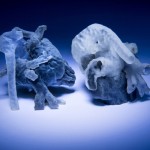
A new system can convert MRI scans into 3D-printed, physical models in a few hours. Researchers at MIT and Boston Children’s Hospital have developed a system that can take MRI scans of a patient’s heart and, in a matter of hours, convert them into a tangible, physical model that surgeons can use to plan surgery. The models could provide a more intuitive way for surgeons to assess and prepare for the anatomical idiosyncrasies of individual patients. MRI data consist of a series of cross ...
More
Posted in Uncategorized

Aspirin’s disease-fighting abilities

A new study provides key insights into aspirin's disease-fighting abilities. A recent study led by researchers at the Boyce Thompson Institute (BTI) shows that salicylic acid, an active metabolite of aspirin, blocks HMGB1, an inflammatory protein associated with a wide variety of diseases. Aspirin is one of the oldest and most commonly used medicines, but many of its beneficial health effects have been hard for scientists and physicians to explain. Researchers have identified a key targ...
More
Posted in Uncategorized