Gemini Robotics 2.5: Faster Learning and a 96% Factory Pilot

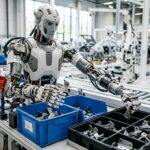
Gemini Robotics 2.5: Faster Learning and a 96% Factory Pilot editorial illustration
AI-generated illustration Teaching a robot to tie a bow on a gift box sounds like a party trick. Teaching it to do that, pipette a liquid, and then sort metal brackets on a car assembly line without falling apart is something else. On November 10, 2026, Google DeepMind introduced Gemini Robotics 2.5, which it calls its most capable vision-language-action (VLA) model to date, and put numbers on that ambition. According to DeepMind's announcement, the model widens the range of skills a rob...
More
Enabot’s EBO Robots: Rolling Companions Grow AI Brains

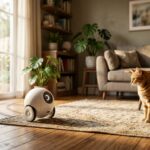
Small round white home robot on wheels rolling across a sunlit living room as a cat watches
AI-generated illustration Most home cameras stare at one corner of one room. Enabot's bet is that the camera should be able to drive itself to the kitchen, find the dog, and ask grandma whether she is all right. Over seven years the Shenzhen company has turned that idea into a family of rolling, softball-to-grapefruit-sized robots called EBO, and in 2026 it pushed the line firmly into AI territory: a flagship that claims long-term memory, a cheaper refresh of its bestseller, and, this mo...
More

ASUS Gallop: A Humanoid Learning a Real Factory Job

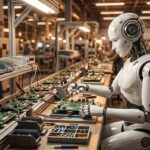
White humanoid robot placing a component on a circuit board on a factory line
AI-generated illustration Humanoid robot videos are everywhere, and most show a machine doing something impressive once. ASUS is trying to answer a plainer question: can a humanoid do one specific factory job, every shift, to the same quality bar as a person? On November 13, 2026, Dr. Albert Chang of ASUS laid out how the company's first humanoid, Gallop, is being built to do exactly that, according to the ASUS Pressroom blog. A real station, not a staged demo Gallop's first job is at an...
More

Moon Surgical’s Maestro Brings Physical AI to Surgery

Robotic surgery has long meant a large console, a dedicated room and a price tag that keeps it out of many operating rooms. Moon Surgical, a company based in Paris and San Francisco, is betting on a different shape for the technology: two compact robotic arms that sit at the bedside, hold the laparoscope and a retractor, and let the surgeon keep using the instruments they already know. Over the past eighteen months the company has turned that idea into something larger, an AI platform that ...
More

Da Vinci 5: The Surgical Robot That Keeps Getting Upgrades

Most surgical robots are judged by what they can do on the day they ship. The da Vinci 5, Intuitive's fifth generation multiport system, was built to be judged differently: by how much it can learn to do afterward. Two and a half years after its U.S. clearance, the platform has picked up the sense of touch in Europe, cardiac indications across three continents, more than 100 software updates and a stated path toward remote surgery. It is quickly becoming the clearest example of a surgical r...
More

Da Vinci Xi: The Surgical Robot Still Expanding Access

When a new flagship robot arrives, the older model usually fades from view. The da Vinci Xi is doing the opposite. Two years after Intuitive introduced its successor, the fourth generation Xi is still being installed in hospitals from Halifax to Ho Chi Minh City, reconditioned for outpatient surgery centers, and supported by a growing aftermarket. For anyone tracking how surgical robotics actually spreads, the Xi has become the platform that carries robotic surgery into new places. What ...
More

2getthere: 27 Years of Driverless Transit, Next Stop Mumbai

Long before robotaxis became a headline, a small fleet of driverless shuttles was already carrying office workers between a Rotterdam metro station and a business park. That system, built by Utrecht-based 2getthere, opened to the public in 1999 and is still running. In October 2026 its third-generation vehicles welcomed their one millionth passenger, and the company that built them now has a new owner, a new headquarters and its largest project yet: a 390-vehicle pod network planned for Mum...
More

Runway Opens Praxis-1, a 27B Video-Trained Robot Brain

Robots have long been held back by a data problem: teaching a machine to handle a mug or a cutting board usually means collecting thousands of hours of costly, hand-guided demonstrations. Runway, better known for video generation, is betting that ordinary video can do much of that teaching. On November 11, 2026, the company released the weights of its Praxis-1 robotics model to everyone. What Runway released According to Runway's announcement, Praxis-1 is a world action model, meaning it pr...
More

HKUST’s Bionic Eye Packs 367,500 Pixels on a Curved Retina

Most cameras look at the world through a flat sensor, which is not how eyes work. Biological retinas are curved, and that curve lets a simple lens cover a wide view with little distortion. Researchers at the Hong Kong University of Science and Technology (HKUST) have now built a bionic eye that follows that design, with nearly 400,000 light-sensing pixels on a hemispherical surface. The team's results, published in Nature Materials and announced by HKUST on November 13, 2026, combine full-c...
More

Michigan’s PRISM Gives Robot Brains a Physics-Aware Input Layer

When a humanoid robot steps forward, the forces on its knee depend on what its hip and ankle are doing at that same moment. Physics is full of these multiplied relationships. Yet the neural networks that control many robots are built on a design borrowed from image recognition, which does not multiply anything directly. Researchers at the University of Michigan say fixing that single mismatch can make robots noticeably steadier. The team's new component, PRISM, was described in a Michigan E...
More

NTT’s Physical AI Lets Robots Predict Failures Before They Move

Most robots learn from mistakes the expensive way: they act, something falls, and the system tries again. On November 11, 2026, NTT announced a different approach. Its new physical AI technology lets a robot imagine what will happen for several possible moves, then pick the one least likely to end in a collapsed stack or a dropped item. According to NTT's press release, the system raised the success rate of a shelf-loading task from 73.1% to 92.3%. The first target is a messy real-world job...
More

Teradyne Omnyx Edge Tests the Boards Inside Physical AI

Everyone talks about the AI model inside a robot. Far fewer ask who checks the circuit boards that run it. Teradyne thinks that question gets more urgent as AI leaves the data center, and on November 9, 2026 it introduced Omnyx Edge, an inline board test platform built for exactly that job. The company, which makes automated test equipment and advanced robotics, positions the product as the edge-focused sibling of its Omnyx family, which established its AI board test capability in the data ...
More

Berkeley’s Agentic Robotics Lets AI Agents Write Robot Code

For years, teaching a robot a new job meant one of two slow paths: hand-write the control software, or collect mountains of demonstrations. A UC Berkeley roboticist now says a third path is opening, one where teams of AI agents write the robot's program, rehearse it in simulation and fix it when it fails. Ken Goldberg, a professor of engineering at Berkeley, and Spencer Huang, director of robotics engineering at NVIDIA, call the approach agentic robotics. Berkeley News described it on Novem...
More

JHU Robot Removes Kidney Tumors From Gel Models on Its Own

Soft tissue moves, stretches and slides the moment a surgeon cuts it, which is exactly why handing a scalpel to a machine is so hard. A Johns Hopkins team now reports a robot that kept track of those changes and removed tumors from eight lab-made kidneys, making 77 cuts without a single error. The result, announced by the Department of Mechanical Engineering on November 9, 2026, is a research milestone in a controlled setting. The kidneys were synthetic gel models, not patients, and the wor...
More

MIT’s FLEX Lets Robots Read Between the Lines of Commands

Tell a robot "don't spill on the laptop" and it will dodge the laptop. Ask a person the same thing and they quietly understand that phones, tablets and anything with a battery are also off limits. On November 9, 2026, MIT News described a system that tries to close that gap: FLEX, a pipeline from MIT and New York University researchers that lets robots read meaning beyond the literal words of a correction. The work is slated for presentation at the Conference on Robot Learning this month. I...
More

MIT’s UQ-DAAAM Helps Robots Fix Their Own Wrong Memories

Picture a robot sent to fetch a wall-mounted defibrillator. If its stored memory wrongly lists that object as a fire extinguisher, it may never find the device. That example opens an MIT News report, published November 5, 2026, on a new system that lets a robot notice when its own memory might be wrong and repair it. The system is called UQ-DAAAM, short for Uncertainty Quantification for Describe Anything, Anywhere, at Any Moment. It was developed by researchers at MIT, led by associate pro...
More

Inkjet Hologram Printing Now Possible

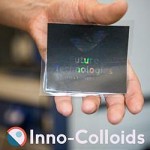
Vivid holographic images and text can now be produced by means of an ordinary inkjet printer. This new method, developed by a team of scientists from ITMO University, is expected to significantly reduce the cost and time needed to create the so-called rainbow holograms, commonly used for security purposes, to protect valuable items, such as credit cards and paper currency, from piracy and falsification. The results of the study were published in Advanced Functional Materials scientific journal o...
More

BOT: A Vision For Commuting in the Future

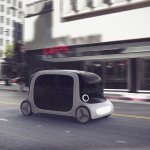
    The idea is to combine taxi service, real-time ride sharing and self-driving vehicles. Friendly looking vehicles named BOT will be in constant connection with the network that accepts ride-requests. They can pick up users at any location, and unlike public transport, drive them directly to the destination. If someone needs to go in similar direction, the system allows him or her to join a ride, making it an efficient way to commute. One cab could replace 4 or even more privat...
More

Penguin Anti-Ice.

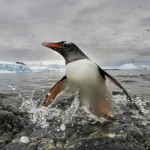
Scientists studying penguins’ feathers have revealed how the birds stay ice free when hopping in and out of below zero waters in the Antarctic. Penguins living in the Antarctic are highly evolved to cope with harsh conditions, their short outer feathers overlap to make a thick protective layer over fluffier feathers which keep them warm. Under their skin, a thick layer of fat keeps them insulated. The flightless birds spend a lot of time in the sea and are extremely agile and graceful swimmers, ...
More

PIXELIO Transforms Your Smartphone into a 3D Scanning Planetary Arm

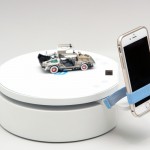
A new UK-based startup, Smart 3D Company, Ltd., has come out with an innovative and easy-to-use device that, combined with a smartphone, will allow users to scan small objects in 3D, as well as take pictures or shoot 360° time lapse videos. The device is not only useful for photographers or 3D printer users, but also architects, engineers, graphic designers, bloggers and many more. PIXELIO, in combination with free software installed on your smartphone (eg. Autodesk 123D Catch), will allow us...
More

The ‘magic’ hi-tech window

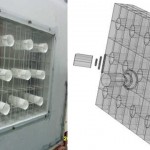
Researcher have revealed the ultimate window one that can block out sound, but let fresh air in. It could be the answer to any city dweller's dreams. The double glazed windows have holes designed to let air in but block the most annoying frequencies. That tends to be the range of artificial sounds, leaving the natural sounds in the 0-500 Hz range largely undisturbed. After sending sound waves of 80 decibels, which is louder than a vacuum cleaner, through both windows, the pair discovered that th...
More

Using jeans to purify the air.

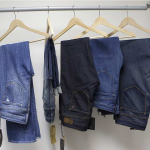
There are more jeans in the world than people. That sparked an idea in the mind of University of Sheffield chemist Tony Ryan. Why not use people’s penchant for wearing denim to help purify the air? With thoughts of reducing pollutants such as the nitrogen oxides and volatile organic compounds emitted by vehicles, power plants, residential heating, cooking and various consumer products, Ryan, in partnership with former fashion designer Helen Storey, came up with the concept of “Catalytic Clothing...
More

Flexible, implantable device could block pain signals

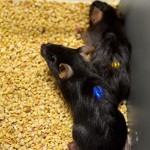
Building on wireless technology that has the potential to interfere with pain, scientists have developed flexible, implantable devices that can activate and, in theory, block pain signals in the body and spinal cord before those signals reach the brain. The researchers, at Washington University School of Medicine in St. Louis and the University of Illinois at Urbana-Champaign, said the implants one day may be used in different parts of the body to fight pain that doesn’t respond to other therapi...
More

Using Holography to better understand clouds.

Scientists have just made a breakthrough in understanding how clouds interact with the surrounding air by studying clouds in unprecedented detail. Raymond Shaw, a professor of physics at Michigan Tech, looks at the smallest part of clouds, droplets. To understand groups of droplets, Shaw and the NCAR team flew airplanes through fluffy, cottonball cumulus clouds in Wyoming and Colorado. Aboard the plane, the team took detailed 3-D images with an instrument called the Holographic Detector for Clou...
More

Battery-free pacemaker powered by the heart itself

Scientists are developing next-generation battery-free implantable pacemakers that may be powered by an unlikely source, the heart itself. The advancement is based upon a piezoelectric system that converts vibrational energy, created inside the chest by each heartbeat, into electricity to power the pacemaker. "Essentially, we're creating technology that will allow pacemakers to be powered by the very heart that they are regulating," said M Amin Karami, assistant professor of mechanical engineeri...
More

New crystal captures carbon from humid gas

A new material with micropores might be a way to fight climate change. Scientists have created crystals that capture carbon dioxide much more efficiently than previously known materials, even in the presence of water. The research was recently published in a report in the scientific journal Science. One way to mitigate climate change could be to capture carbon dioxide (CO2) from the air. So far this has been difficult, since the presence of water prevents the adsorption of CO2. Complete dehyd...
More

Tesla Autopilot Mode – Model S Software Version 7.0

Tesla has launched a software update for its vehicles enabling the cars to have an "autopilot" mode. The latest software update, 7.0 allows Model S to use its unique combination of cameras, radar, ultrasonic sensors and data to automatically steer down the highway, change lanes, and adjust speed in response to traffic. Once you’ve arrived at your destination, Model S scans for a parking space and parallel parks on your command. Today’s update increases the driver’s confidence behind the wheel...
More

Robo Washer: The All-In-One Sink, Faucet, Soap Dispenser and Hand Dryer

Amazing self-cleaning invention that replaces sink, faucet, soap dispenser and hand dryer all in one, has been just launched on Kickstarter. This gadget may fix one of the worst things about using public bathrooms. In addition to waiting on long lines, one of the worst things about public bathrooms is having to use the same sink faucets and hand dryers that dozens before you have touched. Robo-Washer Revolution cleans and dries hands, then recycles its water after each use. The Robo-Washer is...
More

CubeSensors monitor your sleeping environment

CubeSensors is a startup that makes small, pretty stylish, connected devices that monitor rooms, feeding back information about air quality, temperature, and other things. They are little boxes containing a few environmental sensors. These let you know how much nasty stuff was in your air and has systems of measuring temperature and humidity. Sense is a sleep tracking device measures temperature, humidity and ambient light. The Cubes that use the new Sleep feature glow gently to remind you wh...
More

UV-light enabled catheter fixes heart defects without surgery

The newly designed catheter device utilizes UV light technology and can be used to place the patch in a beating heart without open heart surgery. Researchers from Boston Children’s Hospital, the Wyss Institute for Biologically Inspired Engineering at Harvard University, Harvard John A. Paulson School of Engineering and Applied Sciences (SEAS) and the Karp Lab at Brigham and Women’s Hospital have jointly designed a specialized catheter for fixing holes in the heart using a biodegradable adhesive ...
More