
Scientists at the University of Illinois have developed a new technique to create hydrogels, which can realistically and quickly recreate microenvironments found across biology. To illustrate the potential of their method, the Illinois team mixed breast cancer cells and macrophages that signal cancer cells to spread and grow into a tumor. They were able to observe how differently cells act in the three-dimensional, gel-like environment, which is much more like body tissues than the current resea...
More
Sora 2
Canberra schoolboy William Grame wins trip to NASA for diabetes test-strip invention

William Grame's invention to dispose of diabetics blood testing strips, has won the 11-year-old a trip to NASA. William's invention is a small, plastic disposal unit that fits into testing kits used by diabetics. Diabetics can feed strips into it throughout the day, and dispose them all when it gets full. William has 3D-printed a device that safely stores diabetes test strips. It is well established that diabetes wreaks havoc on people's blood sugar levels, but one thing we don't usually think a...
More
Killing HIV by targeting its sweet tooth

Scientists have discovered that HIV has a voracious sweet tooth, which may be its Achilles’ heel, reports a new study from Northwestern Medicine and collaborators. After the virus invades an activated immune cell, it craves sugar and nutrients from the cell to replicate and fuel its wild growth throughout the body. Teams from Northwestern University and Vanderbilt University have reportedly discovered a way to block the virus from feasting on the glucose in an infected patient’s bloodstream.
...
More
Nature inspires first artificial molecular pump

The first artificial molecular pump that uses non-equilibrium chemistry was developed by a team of Northwestern scientists, in which molecules pump other molecules. This tiny machine is no small feat. The pump one day might be used to power other molecular machines, such as artificial muscles.
The new machine mimics the pumping mechanism of life-sustaining proteins that move small molecules around living cells to metabolize and store energy from food. For its food, the artificial pump draws p...
More
A new sunblock that does not penetrate the skin

Researchers at Yale have developed a sunscreen made with bioadhesive nanoparticles that is not only waterproof, but does not penetrate the skin barrier, eliminating the health concerns associated with commercial sunscreens.
While sunblocks are good at preventing sunburn and decreasing the risk of skin cancer from sun exposure, nanoparticles designed to reflect or absorb cancer-causing ultraviolet light, can go below the skin’s surface and enter the bloodstream. As a result, they pose possible...
More
Viruses are Alive

A new analysis supports the hypothesis that viruses are living entities that share a long evolutionary history with cells. The study offers the first reliable method for tracing viral evolution back to a time when neither viruses nor cells existed in the forms recognized today.
Until now, viruses have been difficult to classify because of the abundance and diversity of viruses. Less than 4,900 viruses have been identified and sequenced so far, even though scientists estimate there are more th...
More
Young scientist bags Google science prize for Ebola express detection kit.

Olivia Hallisey of Greenwich, won the top prize for her Ebola test kit in the fifth annual Google Science Fair, which honored nine students aged 13 to 18 from all over the world last week. The Connecticut-based sophomore from Greenwich High School invented the much needed "novel temperature-dependent, rapid, simple and inexpensive Ebola detection platform." It could soon be much easier to diagnose Ebola thanks to this student’s new invention.
Aid workers in Ebola-stricken regions could soon b...
More
A mirror that monitors vital signs

Wish you could check your vital stats while brushing your teeth? Thanks to the new innovation by MIT PhD student Ming-Zher Poh, reading your pulse and other vital stats may someday be as easy as standing in your bathroom.
Working with public-domain software, Poh developed a way to measure the pulse by analyzing subjects sitting in front of a two-way mirror.
The MIT Media Lab Medical Mirror is equipped with a computer monitor along with a built-in camera that tracks changes in brightness pr...
More
Combination drug therapy shrinks pancreatic tumors in mice
A combination of two drugs appears to be effective at shrinking pancreatic cancers in laboratory mice
Pancreatic cancer is one of the most deadly of all human cancers, and its incidence is increasing. A combination of two drugs, one already approved by the Food and Drug Administration, appears to be effective at shrinking pancreatic cancers in laboratory mice, according to a new study by researchers at the Stanford University School of Medicine.
The drugs, which affect the structure and fu...
More
Cheaper, Faster, More Accurate Test to Identify Gene Defects in Heart Patients

Stanford researchers have designed a new technique to test cardiac patients for any genes that might be causing problems.
This new technique could eventually enable doctors to diagnose genetic heart diseases by rapidly scanning more than 85 genes known to cause cardiac anomalies.
For the subset of heart patients whose illness isn’t caused by a lifetime of cigarettes, trans fats or high glycemic foods, a new genetic test developed at the Stanford University School of Medicine may be able to...
More
Penn scientists make breakthrough in Alzheimer’s disease research
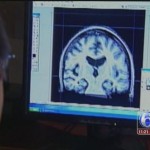
Scientists reveal a cure for Alzheimer's disease may be closer than we thought.
University of Pennsylvania researchers have made some exciting strides in the fight against Alzheimer's and they hope the discoveries will lead to a delay in the onset of the disease.
Alzheimer's disease is a heartbreaking condition for both patients and their family members. Almost half the people who live to be 85 years old will develop Alzheimer's disease.
Dr. Lee and Dr. John Trojanowski have lead the wa...
More
Scientists produce cancer drug from rare plant in lab

Stanford scientists produce cancer drug from rare plant in lab to benefit human health.
Elizabeth Sattely, an assistant professor of chemical engineering at Stanford, and her graduate student Warren Lau have isolated the machinery for making a widely used cancer-fighting drug from an endangered plant.
Many of the drugs we take today to treat pain, fight cancer or other diseases were originally identified in plants, some of which are endangered or hard to grow. In many cases, those plants a...
More
Inexpensive, Portable Wound-Healing Device
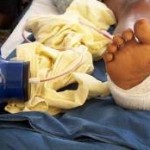
A novel and inexpensive device known as the wound pump has been invented by Daielle Zurovcik, which is a portable wound-healing device.
This negative pressure pump helps to heal acute and chronic wounds, which will be affordable to low-income populations because it does not need electricity or batteries to operate and has a unique, simplified design.
After surgery a patient requires care for an amputated limb or the open wounds of a fractured bone. Vacuum pumps speed healing by removing ba...
More
Personalized heart models for surgical planning
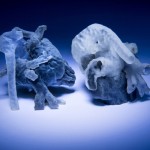
A new system can convert MRI scans into 3D-printed, physical models in a few hours.
Researchers at MIT and Boston Children’s Hospital have developed a system that can take MRI scans of a patient’s heart and, in a matter of hours, convert them into a tangible, physical model that surgeons can use to plan surgery.
The models could provide a more intuitive way for surgeons to assess and prepare for the anatomical idiosyncrasies of individual patients.
MRI data consist of a series of cross ...
More
Drug disarms deadly C. difficile bacteria without destroying healthy gut flora
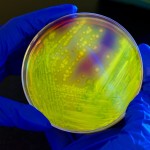
Scientists find way to disarm deadly bacteria without destroying the good ones in your gut.
The new discovery of a drug that blocks the intestinal pathogen without killing resident, beneficial microbes may prove superior to antibiotics, currently the front-line treatment for infection.
Nearly half a million Americans get infected in a single year by Clostridium difficile, a dangerous bacteria that causes life-threatening diarrhea. It kills 15,000 people a year. It's the most common cause o...
More
Building a brain from the inside out
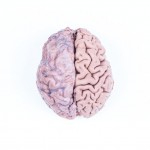
Researchers at UC San Francisco have succeeded in mapping the genetic signature of a unique group of stem cells in the human brain that seem to generate most of the neurons in our massive cerebral cortex.
The human cerebral cortex contains 16 billion neurons, wired together into arcane, layered circuits responsible for everything from our ability to walk and talk to our sense of nostalgia and drive to dream of the future.
In the course of human evolution, the cortex has expanded as much as...
More
Paralyzed man walks again after cell transplant
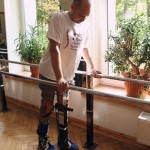
The world's first cell transplant enables paralyzed man to walk.
A ground-breaking cell transplant, the world's first, was carried out by surgeons in Poland in collaboration with scientists in London on Darek Fidyka who was paralyzed from the chest down after a brutal knife attack in 2010 left with an 8mm gap in his spinal column. He showed no sign of recovery despite many months of intensive physiotherapy.
Darek's injuries were so severe that no level of therapy could give him feeling bac...
More
Kidney Transplant Breakthrough

Yokoo and his team who have found a way to grow a full-sized kidney using stem cells.
The American Cancer Society estimates there will be 61,000 new cases of kidney cancer in the United States this year. About 14,000 Americans will die from the disease in 2015. Kidney cancer is rare in people under the age of 45. The average age in the United States for diagnosis is 64. Still, there are more than 100,000 people in the United States awaiting kidney transplants, according to the National Kidney...
More
3D-printed toothbrush cleans all Your teeth in 6 Seconds

Imagine if you could brush your teeth in six seconds. Bizzident is the 6 Second toothbrush that provides a faster and better way to brush your teeth.
This new and revolutionary technique of brushing has just been developed by a team of dentists who have created a toothbrush which they claim can clean teeth thoroughly in such a short amount of time.
The process of ordering one of these custom-fit brushes begins in your dentist's office. Your dentist takes an impression of your teeth and sen...
More
OncoSec’s novel intratumoral therapies

OncoSec Medical Incorporated ("OncoSec") has designed "smart" catheter-based devices to perform minimally invasive intratumoral immunotherapy.
The new catheter-based electrodes are designed to be compatible with standard medical instruments which can access deep visceral tumors and are capable of treating the tumor.
These all-in-one devices have the ability to inject a DNA-based agent while deploying electrodes to perform electroporation in a single procedure.
They have an adjustable ne...
More
Rubber That Can Use Energy from body movements to Generate Power

Power-generating rubber material could harness walking and other movement to charge electronic devices.
Researchers at Princeton University have recently invented a new energy-harvesting rubber material composed of ceramic nanoribbons that could harvest energy from your breathing and walking.
This material is composed of ceramic nanoribbons embedded onto silicone rubber sheets which generates electricity when flexed and is highly efficient at converting mechanical energy to electrical ener...
More
Sugar Preserves Vaccines without Refrigeration

A sugar–glass cartridge can store vaccines without refrigeration.
Scientists at Nova Bio-Pharma Technologies and the University of Oxford have developed a new way of preserving vaccines without refrigeration by sealing the vaccine's live viruses inside glass made of sugar.
Currently, vaccines need to be stored in a fridge or freezer which means there is a need for electricity supply and refrigeration trucks for distribution as exposure to inappropriate temperatures can reduce the vaccine p...
More
Smart Pills for collecting data inside the body

Imagine if a vitamin sized pill could collect medical data from your body. Companies such as SmartPill have come out with wireless devices contained in tiny capsules to collect information from inside the body.
The SmartPill capsule includes miniaturized sensors or cameras, a printed circuit board and tiny batteries that work to collect medical data as it makes its way through a person's gastrointestinal tract.
Once swallowed, the device collects the required information, stores the data a...
More
Contacts lenses that changes color when sugar levels change in the blood

Smart contact lens, created by a University of Western Ontario professor, help measure blood glucose levels for people with diabetes.
An ongoing innovative research of a new Smart Lens by Jin Shang, a professor of biochemical engineering at the University of Western Ontario is a contact lens that changes color when sugar levels change in the blood.
Diabetes is a huge and growing problem affecting one in every 19 people on the planet. It is a daily struggle for people with diabetes to keep ...
More
Ultra-flexible, Ultra-Thin Devices Developed to Monitor the Brain

Brain activity can be monitored with tiny flexible electronics which could roll up to fit in a pocket.
Charles Lieber, a nanoscientist and nanotechnologist at Harvard University, has designed latest ultra-thin electronics flexible enough to get stuffed into the needle of a syringe with a diameter as small as the average width of a human hair.
Traditional electronics are rigid and the procedures to measure brain activity would involve surgery; surgeons would make an opening equal to the siz...
More
Revolutionary Invention Created to Build Human Organs

A new technology that uses three dimensional human tissues to build organs.
Organovo is an early-stage medical laboratory and research company which designs and develops three dimensional human tissue for medical research and therapeutic applications. The latest science invention from Organovo is a technology (novogen) which allows living tissue cells to be assembled into patterns and complex structures such as organs.
Organovo has partnered with Invetech., a company based in Australia to...
More
A Novel Stethoscope Save Costs and Save Lives

A new cardiac stethoscope funded by the National Science Foundation (NSF) helps doctors detect heart failure more effectively than ever before.
Despite advances in medicine that make many heart conditions treatable, the absence of effective, early diagnosis often leads to sudden, unexpected deaths. Annually more than one million patients are hospitalized due to heart failure and the cost of health care services, medications to treat heart failure etc. are tremendous. Furthermore most of the p...
More
Amazing Water Drop Lenses

A new discovery has led to the creation of liquid optical lenses.
Bruno Berge, physicist and inventor, has created liquid optical lens by a process known as electro-wetting. In this process, a water drop is deposited on a metal substrate and covered by a thin insulating layer. When a voltage is applied to the metal, it modifies the angle of the liquid drop.
The liquid lens is comprised of two liquids, water and oil; one is a conductor while the other is an insulator.
A variation in the ...
More
Stick-on Micro-Electric Medical Tattoo Invented

A novel stick on tattoo has been developed that can effectively measure data about the human heart, brain waves and muscle activity.
The latest in medical invention is new type of ultra-thin, self-adhesive electronic device that can effectively measure the aforementioned vital signs without the use of bulky equipment, conductive fluids, or glues.
This product is in the form of a tattoo which has to be applied to the skin like any ink transfer tattoo. It is made from a rubbery polymer subst...
More
Life-Saving Infant Incubator That Requires No Electricity

A new portable and reusable infant incubator that requires no electricity and minimal costs was invented by Jane Chen and Rajan Patel.
These two innovators came up with an innovative infant warmer which is simple, energy-efficient, and cost-effective.
Every year 20 million babies are born premature with low birth weight and they struggle to survive because they cannot regulate their body temperature and they don't have enough fat on their tiny bodies to keep warm.
The solution is to kee...
More